
Renting with a dog can be challenging, especially if your lease includes pet restrictions or your landlord seems unsure about your pup. One common hurdle renters face is proving that their dog will not become a legal or financial problem. That is where dog liability insurance comes in.
If your lease or rental agreement requires dog liability insurance, or if your landlord is hesitant because of your dog’s breed or size, it helps to approach the conversation with the right information. This guide will walk you through how to talk to your landlord about dog liability coverage, how to present a Certificate of Insurance (COI), and how to address any concerns they may have, especially if you have a restricted breed.
Step 1: Understand Why Landlords Ask for Dog Liability Insurance
Before you talk to your landlord, it is important to understand their concerns. Landlords are legally responsible for what happens on their property. If your dog bites someone or causes damage, the landlord could be pulled into a lawsuit, even if they were not involved. Dog liability insurance helps protect them (and you) from these risks.
Some landlords also have insurance policies that restrict certain breeds. If they allow a dog that their insurance excludes, they may lose their own coverage. Knowing this helps you stay calm and factual when discussing your dog.
Step 2: Gather Your Dog Liability Proof
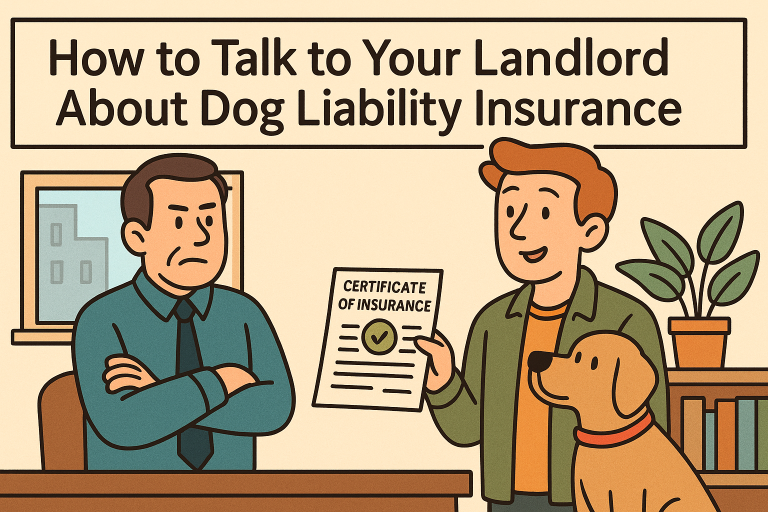
Landlords do not want promises they want paperwork. That is where a Certificate of Insurance (COI) comes in. A COI is a short document that proves you have an active liability insurance policy for your dog. It lists the policy details, coverage amount, and dates.
Ask your insurance provider for a COI that clearly shows:
-
Your name and address
-
The liability coverage amount (commonly $100,000 or more)
-
The policy dates
-
Your landlord or property manager is listed as “Additional Insured,” if requested
Having this ready before your conversation shows that you are a responsible pet owner who understands their obligations.
Step 3: Choose the Right Time to Talk
If you are signing a new lease, bring it up early before move-in day. If you already live there, ask to schedule a brief conversation. Avoid waiting until the last minute or hoping they will not bring it up.
A respectful, direct approach is best. You could say:
“Hi [Landlord’s Name], I wanted to make sure we’re aligned on the pet policy. I’ve taken steps to protect both of us by getting dog liability insurance, and I can provide a Certificate of Insurance. I’d be happy to show you the paperwork and answer any questions you have.”
This shows that you are proactive and solutions-focused.
Step 4: Address Breed Restrictions with Care
If you own a breed that is commonly restricted, such as a pit bull, Rottweiler, Doberman, or German shepherd, acknowledge the concern but focus on the facts.
Do not argue about stereotypes. Instead, say something like:
“I understand certain breeds raise red flags due to insurance rules. That is why I made sure to get a liability policy that covers my specific dog. Here is a COI that proves I have coverage in place. I’m also happy to introduce my dog to you, so you feel more comfortable.”
You can also provide information about your dog’s training, temperament, or past behavior. Any history of obedience classes, professional training, or years without incident can go a long way.
Step 5: Reassure with the Right Details
Let your landlord know that this insurance protects everyone. You are not just checking a box—you are reducing their risk.
Key points to mention:
-
Your insurance helps cover medical bills or property damage if your dog causes harm.
-
It reduces the chance that the landlord’s own insurance will be impacted.
-
It shows that you are taking responsibility as a tenant and dog owner.
When presented professionally, landlords are often more open than you think.
Step 6: Follow Up in Writing
After your conversation, follow up with a short email or message. Attach the COI and offer to answer any remaining questions. That way, you have a record of communication and a paper trail confirming that you have provided proof of coverage.
Example message:
“Thanks for taking the time to talk earlier. Attached is the Certificate of Insurance showing liability coverage for my dog. Please let me know if there is anything else you need from me.”
Final Thoughts
Talking to your landlord about dog insurance does not have to be awkward. With a calm approach, clear documentation, and a willingness to address concerns, you can turn a potential issue into a simple conversation.
If you are renting with a dog, especially a breed that raises concerns, being prepared with dog liability insurance and a COI can make all the difference.
By staying professional and providing the right proof, you protect your rental lease, your pet, and your peace of mind.


